

Portable Reading Accessories for Travel Reading
Portable reading accessories are compact reading tools that support travel reading when space, movement, lighting, and posture change the way a book is used. They can include a book light for low-light moments, a book sleeve for protection, a foldable stand for support, or a page holder for steadier page control. Their value is not the number of items carried, but how well each tool fits the travel reading problem.
On-the-go reading can happen during commuting, waiting, flights, road trips, hotel stays, or quiet breaks away from home. In these situations, reading accessories work as support tools when they make a book easier to carry, protect, hold, light, or use without adding avoidable friction. Portable does not automatically mean smallest or most minimal; it means suitable for the reader’s bag space, reading format, and travel situation.
The main challenge is that a travel accessory may solve one problem while creating another. A compact book light may help with lighting, while a larger book sleeve may improve protection but use more bag space. A foldable stand or page holder may improve stability and reading comfort only when the book format, surface, and reading posture make that support practical. The main decision variables are book format, bag space, lighting, trip length, protection need, stability, and comfort.
What makes a reading accessory travel-friendly
A travel-friendly reading accessory is a portable tool that remains useful during movement while being easy to pack, carry, and use. A travel-friendly reading accessory combines compact design, lightweight carry, protection, setup speed, and stable use. These attributes determine how well the accessory fits travel conditions without creating unnecessary packing or handling challenges.
What makes a reading accessory travel-friendly becomes clearer when portability is balanced with usability. A protective sleeve can help reduce damage risk in a bag, while a stable stand or page holder may support reading comfort in changing environments. A travel-ready accessory should be easy to pack and quick to use when needed. Travel-friendly does not always mean smallest if protection, light quality, or usability may be reduced.

A travel-friendly reading accessory supports portability, protection, and usability at the same time. The checklist below helps verify whether a travel-friendly reading accessory meets those core requirements for convenient on-the-go reading.
- Compactness: Packs efficiently without using unnecessary bag space.
- Weight: Remains lightweight enough for comfortable carrying.
- Protection: Helps lower damage risk through a protective sleeve, pouch, or similar feature.
- Setup speed: Can be prepared for use with minimal adjustment.
- Stability: Supports a stable reading position for better reading comfort.
- Fit: Remains useful for the reading format, travel context, and movement conditions involved.
Core portable accessories for reading on the go
Core portable accessories for reading on the go are function-based tools that support reading in changing travel conditions. Rather than acting as standalone product targets, they address needs related to light, protection, support, and page control. Their travel value depends on how those functions match the reading environment, available space, and movement during use. These accessories are best understood when grouped by function.
Different travel situations can create challenges such as low-light reading, limited protection in a bag, or reduced stability while holding a book. Core portable accessories for reading on the go can be organized into light, protection, support, and page control groups. The image and table below show how these groups relate to their primary travel purpose.

| Accessory group | Main portable attribute | Travel value | Limitation to check |
|---|---|---|---|
| Portable book light | Light | May improve visibility during low-light travel reading | Brightness and battery requirements can vary by travel setting |
| Travel book sleeve or book carrying pouch | Protection | Can help protect a book during transport in a bag | Protection level may depend on book size and packing conditions |
| Foldable book stand | Support | May provide stability when reading on an available surface | Usefulness depends on space and reading posture |
| Compact page holder | Page control | Can support one-handed reading during movement | Suitability may vary by reading format and handling preference |
Portable book lights for low-light travel
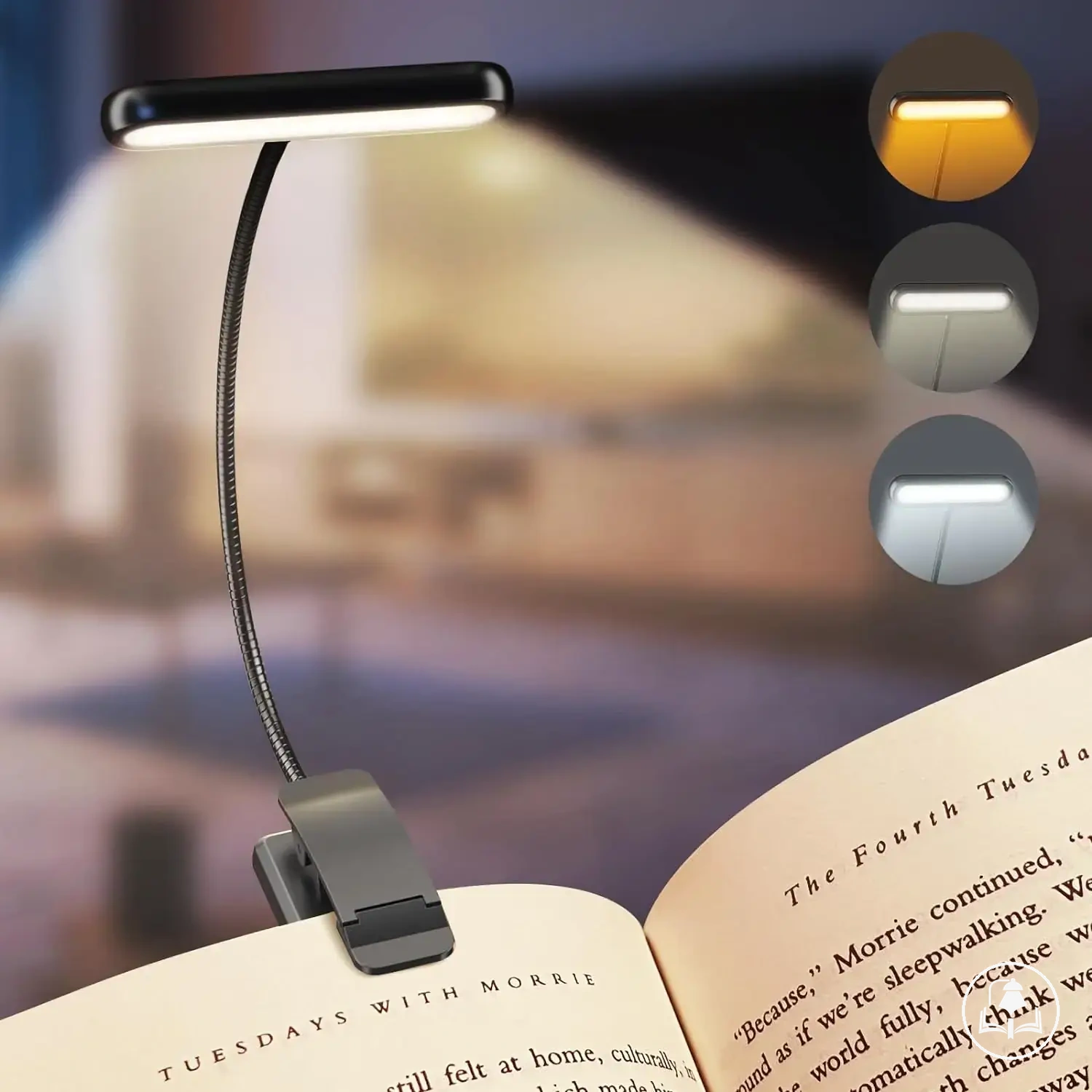
A portable book light helps solve visibility problems when reading in low-light travel conditions. During commuting, a flight, or a hotel stay, a portable book light provides focused illumination that can make text easier to see when ambient lighting is limited. This direct visibility support addresses the local challenge of low-light travel.
Portable book lights for low-light travel are useful when light control and power features match the reading environment. A clip-on light may provide stable positioning on a book, while a neck light may offer more flexible placement in shared spaces when brightness control and light angle are managed carefully. The image below highlights visibility, angle control, and shared-space comfort, while the following checks focus on key attributes.

- Clip strength: A clip-on light may remain more stable when book thickness and movement conditions are suitable.
- Brightness control: Adjustable settings can help balance page visibility and glare in low-light travel.
- Battery life and charging: A rechargeable reading light may be more practical for flights, hotel stays, or repeated travel use.
- Light angle: Controlled positioning can help direct light onto the page while limiting unnecessary light spill.
- Shared-space comfort: A neck light or clip-on light may be less disruptive when brightness and light direction are adjusted carefully.
Travel book sleeves, pouches, and carrying cases
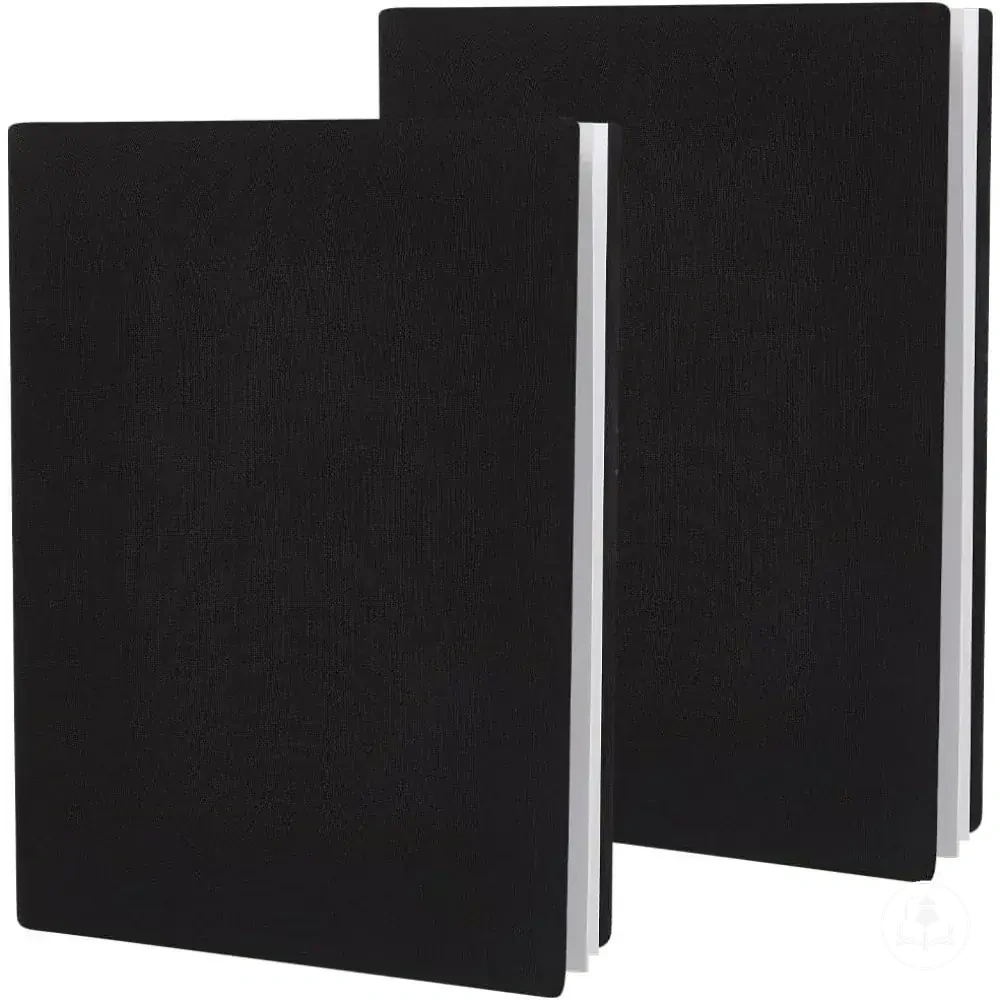
Travel book sleeves, pouches, and carrying cases help protect books and small reading tools from movement, friction, and packing pressure during travel. A travel book sleeve, book carrying pouch, or carrying case can also keep reading items together for quicker access when moving between locations. Their primary role is travel-focused protection and organization during movement.
When a book is carried in a backpack, carry-on bag, or travel tote, protection needs can vary by book size, cover type, and surrounding items. A paperback may be more prone to bending, while a hardcover may require additional space because of its thickness. Material, closure type, fit, pocket design, and potential bulk are useful checks when comparing protection formats.
- Travel book sleeve: A protective sleeve uses material and fit to help reduce wear during travel. The level of protection may depend on book size, closure design, and packing pressure.
- Book carrying pouch: A book carrying pouch often combines a closure and pocket design to improve access to reading items while keeping them together during movement.
- Carrying case: A carrying case may provide more structure than a sleeve or pouch, though that structure can add bulk in limited bag space.
- Paperback and hardcover fit: Fit depends on book dimensions and cover thickness. A thicker hardcover may need more internal space than a paperback.
- Accessory bundle: When carrying notes, tabs, bookmarks, or page tracking tools, an internal pocket can help keep small items accessible alongside the book.
This chart compares the three main travel book protection formats—sleeve, pouch, and carrying case—highlighting their attributes and trade-offs.

Foldable stands and compact page holders
A foldable book stand supports the book, while a compact page holder manages page movement during reading. Both tools can support hands-free or hands-light reading in portable settings, but their usefulness depends on packed size, book format, and available support conditions. A foldable stand focuses on book support, while a compact page holder focuses on page control.
When reading on a tray table, bench, or other travel surface, a portable reading stand may improve comfort if the surface remains stable and the book format is suitable. A compact page holder or thumb holder can support one-handed reading during movement, though usability may vary with page pressure, book thickness, and reading position. Packed size, stability, and format fit should be considered alongside the travel-surface condition.
- Packed size: More compact tools are easier to carry, while larger designs may provide additional stability.
- Stability: A foldable book stand may feel more stable when used on a suitable travel surface.
- Page pressure: A compact page holder uses pressure for page control, and usability can vary by page thickness.
- Surface need: Most portable reading stand designs depend on an available travel surface for hands-free support.
- Format fit: Suitability depends on book format, thickness, and overall weight.
Choosing accessories by travel situation
Choosing accessories by travel situation depends on the constraints created by the reading environment rather than the accessory name. Commuting, waiting, a flight, a road trip, or a hotel stay can each change the balance between lighting, available space, bag space, interruption frequency, and hands free reading needs. The most useful accessory attribute may vary as those conditions change. Different travel situations create different constraints, so priorities change with the reading situation.
The most effective approach is to match the travel situation to the accessory attribute that addresses the primary constraint. Readers who want to extend this travel-focused selection process can also choose by reading habit to compare usage patterns alongside journey type. Choosing accessories by travel situation becomes easier when travel conditions, constraints, and decision signals are organized in one place.
| Travel situation | Main constraint | Useful accessory attribute | Decision signal |
|---|---|---|---|
| Commuting | Frequent interruption and limited available space | Fast access and compact carry | If reading sessions are brief and often interrupted |
| Waiting | Short reading windows and changing locations | Quick page control and easy access | If reading starts and stops repeatedly |
| Flight | Shared lighting and tray-table limitations | Focused lighting or stable support | If lighting conditions or hands free reading may matter |
| Road trip | Movement and interruption frequency | Compact carrying and page management | If reading conditions change during the journey |
| Hotel | Longer reading sessions and trip length | Charging convenience and reading comfort | If extended reading time is expected |
| Limited bag space | Storage and bulk constraints | Protection with reduced bulk | If bag space is more limited than carrying capacity needs |
Commuting, waiting, and short daily trips
Commuting, waiting, and short trips often involve brief reading periods interrupted by movement, boarding, queues, or schedule changes. Reading continuity depends on how quickly a reader can start, pause, and resume without losing momentum. Fast access becomes important because interruption is a common constraint during short sessions.
When reading time is limited, portable features can help reduce friction between interruptions. A compact accessory may be easier to retrieve and store, while minimal setup can help maintain reading continuity during a quick reading session. The practical considerations below focus on short-session convenience.
- Fast access: Compact accessories can reduce handling time when reading in a queue, waiting room, or during a short journey.
- One-handed handling: A page holder may improve convenience on public transport when only one hand is available.
- Minimal setup: Accessories that require little adjustment may help maintain reading continuity during commuting and waiting.
- Bag fit: A compact sleeve or pouch can support protection while fitting more easily into limited bag space.
- Low distraction: A book light with simple controls or a compact handling aid may help maintain focus when interruptions occur frequently.
Flights, road trips, hotels, and longer travel
Flights, road trips, hotels, and longer travel increase the importance of comfort, charging, protection, and stable setup because reading conditions can change across multiple environments. A flight may involve shared lighting and limited tray-table space, while a hotel room may support longer reading sessions that place more emphasis on comfort and charging access. Road trips can introduce movement and repeated packing that affect how reading accessories are carried and used. Longer travel shifts priorities from quick-session convenience toward sustained reading support.
When reading extends beyond short sessions, accessory priorities often change with the reading environment. A book light may become more useful when lighting conditions vary, while a sleeve, pouch, or case may help with protection when books are packed and unpacked repeatedly. Charging, protection, and stable setup become more important as reading conditions change during longer travel.
Shared lighting, tray-table space, suitcase compression, and charging availability can influence accessory choice when they affect reading directly. Their impact depends on the specific travel environment and reading setup.
Flights, road trips, hotels, and longer travel can be assessed with the checklist below to verify comfort, charging, protection, and stable setup.
- Charging: Rechargeable accessories may be more convenient when reading sessions occur repeatedly during extended travel.
- Protection: A sleeve, pouch, or case may help reduce wear when books and accessories are packed, transported, and stored frequently.
- Stable setup: A compact stand may be useful when a stable reading surface is available.
- Shared lighting: A book light may improve visibility when ambient lighting varies, though usefulness depends on the reading environment.
- Tray-table space: Compact accessories may be easier to position when available space is limited.
Fit, size, and book-format compatibility
Fit, size, and book-format compatibility depend on whether a portable accessory matches the book, bag, hands, and reading format used during travel. A paperback, hardcover, or tablet can differ in size, weight, book thickness, and surface characteristics, which may affect accessory fit and usability. A page holder that feels comfortable with one book format may apply different pressure to another, while a stand that supports a lighter format may feel less stable with additional weight. Fit is conditional because compatibility depends on dimensions, material, format, and reading context.
Compatibility problems often occur when protection fit, support fit, and page-control fit are treated as the same requirement. A sleeve relates to protection and bag fit, a stand relates to support and stability, and a page holder relates to handling and page control. Fit, size, and book-format compatibility can be checked before travel using the checklist below.
Fit, size, and book-format compatibility should be reviewed across books, bags, hands, and reading formats to reduce usability issues during travel.
- Book format: Check whether the accessory fit matches a paperback, hardcover, tablet, or mixed reading habit because size and surface attributes can vary.
- Book thickness: A page holder may respond differently to changes in book thickness, which can affect page-control usability.
- Weight: A heavier hardcover may place different stability demands on a stand than a lighter reading format.
- Bag fit: A sleeve or carrying accessory may be more useful when its size aligns with both the book format and available bag space.
- Hands and handling: One-handed use may depend on the relationship between accessory fit, book size, and reading position.
- Surface compatibility: A tablet or other reading format may interact differently with a holder or support accessory because contact surfaces can vary.
- Accessory type: Protection fit, support fit, and page-control fit should be checked separately because each creates a different usability condition.
This chart shows the three types of accessory fit and their key checks to ensure compatibility before travel.

Book size and sleeve fit
Book size and sleeve fit depend on how closely a sleeve matches a book’s height, width, and thickness. A sleeve that aligns more closely with book dimensions may help limit excess movement during travel, while a mismatch can create unused space or added pressure. Book dimensions and sleeve construction work together to determine whether protective fit remains practical under travel conditions.
Fit issues often occur when closure design, pocket layout, or internal space do not match the way a book is carried. A large hardcover, a slim paperback, or a book carried with bookmarks and small tools can create different sleeve-sizing requirements. Book size and sleeve fit can be checked with the sizing checklist below.
Book size and sleeve fit should be verified against both book dimensions and sleeve construction to assess protection, access, bending risk, and excess movement.
- Height and width: A sleeve should provide enough space for the book dimensions without creating excess movement that may affect protective fit.
- Thickness: Book thickness can influence sleeve fit because a thicker hardcover may require more internal space than a slim paperback.
- Closure: A closure that suits the book dimensions may help keep the book positioned more consistently during transport.
- Pocket layout: Bookmarks or small tools carried inside sleeve pockets may affect access and available space depending on the pocket layout.
- Bending and damage risk: Bending, excess movement, or damage risk may increase when sleeve sizing, book dimensions, and packing pressure do not align.
Paperbacks, hardcovers, tablets, and mixed reading formats
Paperbacks, hardcovers, tablets, and mixed reading formats depend on different weight, surface, thickness, and fragility characteristics, which can change how useful portable lights, sleeves, stands, and page holders are during travel. An accessory condition that works well with one reading format may produce a different practical outcome with another. Reading format is the compatibility variable that influences accessory usefulness.
When a reader carries more than one format, accessory choices may need to balance support, protection, visibility, and bag space. For example, mixed reading formats can sometimes reduce the practicality of carrying duplicate tools that address similar needs across different format types. Paperbacks, hardcovers, tablets, and mixed reading formats can be compared through the compatibility conditions below.
Paperbacks, hardcovers, tablets, and mixed reading formats create different support, protection, and visibility needs, and the comparison below organizes those differences.
| Reading format | Compatibility concern | Accessory condition | Practical outcome |
|---|---|---|---|
| Paperback | Thickness and page flexibility | A page holder may respond differently depending on thickness and page resistance | Usability can vary with handling preference and book condition |
| Hardcover | Weight and bulk | A stand may need to support additional weight for stable positioning | Stability may depend on the reading surface and stand construction |
| Tablet | Surface characteristics and visibility conditions | A light or holder may interact differently with the reading surface | Visibility and handling limitations can vary by reading environment |
| Mixed reading formats | Different format requirements | An accessory may suit multiple formats, while others may require format-specific conditions | Bag space and duplicate-tool needs may depend on the combination of formats carried |
Portability trade-offs in weight, protection, and stability
Portability trade-offs depend on balancing weight, protection, stability, and comfort rather than maximizing a single attribute. A lighter accessory may support minimal carry but can reduce support or protection under some travel conditions. A more protective accessory may reduce damage risk during transport while increasing bulk or carry weight. Weight, protection, and stability form the main trade-off axis for portable reading accessories.
A common challenge is choosing between carrying less, protecting more, or creating a more stable reading setup. The practical solution is to evaluate each accessory type against the travel condition where it will be used rather than assuming one compromise suits every situation. Portability trade-offs in weight, protection, and stability become easier to compare when benefit and limitation are viewed side by side. The table below compares the main decision factors.
| Trade-off | What improves | What may get worse | Best-fit travel condition |
|---|---|---|---|
| Minimal carry | Lower weight and more compact packing | Protection or stable reading support may be reduced | Short trips, commuting, or limited bag space |
| Protective carry | Protection through a sleeve or carrying pouch | Weight and bulk may increase | Frequent transport or higher damage risk conditions |
| Stable reading support | Comfort and positioning through a foldable stand | Packed size and carrying weight may increase | Travel situations with a suitable reading surface |
| Balanced setup | Combination of portability and support | No single attribute is fully optimized | Mixed travel conditions with changing reading needs |
Accessory type, trade-off attribute, and travel condition work together to determine practical value. A compact accessory may provide value when minimal carry is the priority, while a protective accessory may offer more value when transport conditions increase damage risk. Readers comparing practical use criteria can also review the value of portable accessories when assessing decision outcomes.
The useful decision outcome depends on whether minimal carry, protective carry, or stable reading support is the stronger priority for the trip. No single trade-off is automatically better because benefit and limitation vary by travel condition, reading habit, and comfort preference. Readers who want examples organized around specific use cases can continue to best reading accessories by need.
Here are product examples that may make comparison easier. Before buying, always review the compatibility criteria, essential features, and product details.



Using travel reading accessories without adding bulk
Using travel reading accessories without adding bulk starts with reducing overlap between tools. A light, sleeve, stand, or holder can support compact travel use, but carrying multiple items with duplicated functions can create excess weight. A smaller accessory combination may still be less practical if it repeats the same job without improving convenience. Bulk often comes from duplicated functions rather than one accessory alone.
When bag space is limited or the trip involves frequent movement, each packing attribute should serve a clear reading purpose. A sleeve that also holds small markers may reduce clutter, while a holder may remove the need for a larger support tool in some short reading sessions. A stand may still be useful when stable reading matters more than minimal carry-weight. Using travel reading accessories without adding bulk can be checked with the mini-checklist below.
- Function overlap: Avoid carrying two tools that solve the same light, support, or page-control problem unless the travel condition requires both.
- Accessory combination: Pair a sleeve, light, stand, or holder only when each item adds a distinct use.
- Packing attribute: Choose flatter or foldable tools when bag space and carry-weight are stronger limits.
- Convenience outcome: Keep the item that improves access or reading continuity, and remove the item that mainly adds clutter.
- Practical fit: A compact setup may still need protection or stability when the trip involves pressure, movement, or longer reading sessions.
The practical goal is to keep support useful while staying within compact travel use. Readers who want to organize a lighter accessory combination can compare this against a compact reading setup.
Here are product examples that may make comparison easier. Before buying, always review the compatibility criteria, essential features, and product details.
This chart shows the main cause of bulk from function duplication and two key checks for packing attributes and convenience outcomes.

When portable reading accessories are not the right fit
Portable reading accessories are not the right fit when they add friction instead of solving a reading problem. A compact tool can become less practical if it reduces comfort, does not suit the reading format, or creates a limitation that outweighs its portability benefit. In those situations, the better decision may be to simplify the setup or accept a non-use outcome for that accessory. Portable is not always the right priority.
The myth is that portability automatically improves every reading setup. The truth is that a travel-first option can become a poor fit when the user situation creates a mismatch between the accessory and the reading need. These mismatch scenarios often relate to comfort, durability, and format mismatch.
When portable reading accessories are not the right fit, the checklist below flags conditions where portability may create friction and where a different decision may be more suitable.
- Comfort mismatch: A smaller accessory may be less practical when longer reading sessions require more support.
- Durability concern: A lightweight design may be unsuitable when repeated handling or travel conditions place greater demands on the accessory.
- Reading format mismatch: An accessory may create friction when its fit does not align with the reading format being used.
- Portability limitation: A travel-first option may provide less support when stability is a higher priority than compact carry.
- Better decision: A home, bed, or desk-oriented accessory may be more suitable when comfort or support matters more than portability.
This chart shows key mismatch conditions where portable reading accessories add friction and the better decision for each scenario.

Common questions about portable reading accessories
Yes, portable reading accessories can support different travel situations, but travel fit depends on the reading environment, available space, and reading format.
Can one accessory be enough for travel reading?
Yes, one accessory can be enough when it addresses the main reading need. A single sleeve, book light, or page holder may provide adequate support depending on the travel condition. The practical check is whether additional items add value or create duplicated functions.
Should I carry a compact set or one accessory?
A compact set may be useful when different reading needs occur during the same trip. However, carrying more items can increase bulk and reduce bag space. The better decision depends on whether each accessory serves a distinct purpose.
Does a sleeve need to match book size closely?
No, a sleeve does not always need an exact match. Protection and travel fit often depend on the relationship between the sleeve, book size, and book thickness. A practical check is whether the book moves excessively or feels overly constrained inside the sleeve.
Can a book light be used in shared spaces?
Yes, a book light can be suitable for shared spaces when light direction and brightness are managed carefully. Focused lighting may reduce unnecessary light spread compared with broader illumination. The outcome depends on positioning and surrounding conditions.
How important is charging for portable reading accessories?
Charging becomes more relevant when accessories are used repeatedly during travel. Rechargeable travel reading accessories may be convenient when charging access is available during the trip. The importance of charging depends on usage frequency and travel duration.
What reading formats work with portable reading accessories?
Portable reading accessories can be used with paperbacks, hardcovers, tablets, and mixed reading formats. Compatibility may vary because reading format influences fit, handling, support, and protection needs. The practical check is whether the accessory matches the intended reading format.
When can portable reading accessories create unnecessary bulk?
Portable reading accessories can create unnecessary bulk when multiple items perform the same function. A larger collection does not always improve travel fit if duplicated functions consume bag space. Reviewing function overlap is a useful way to maintain a compact set.
This chart shows the key factors and practical checks for choosing portable reading accessories for travel.
