
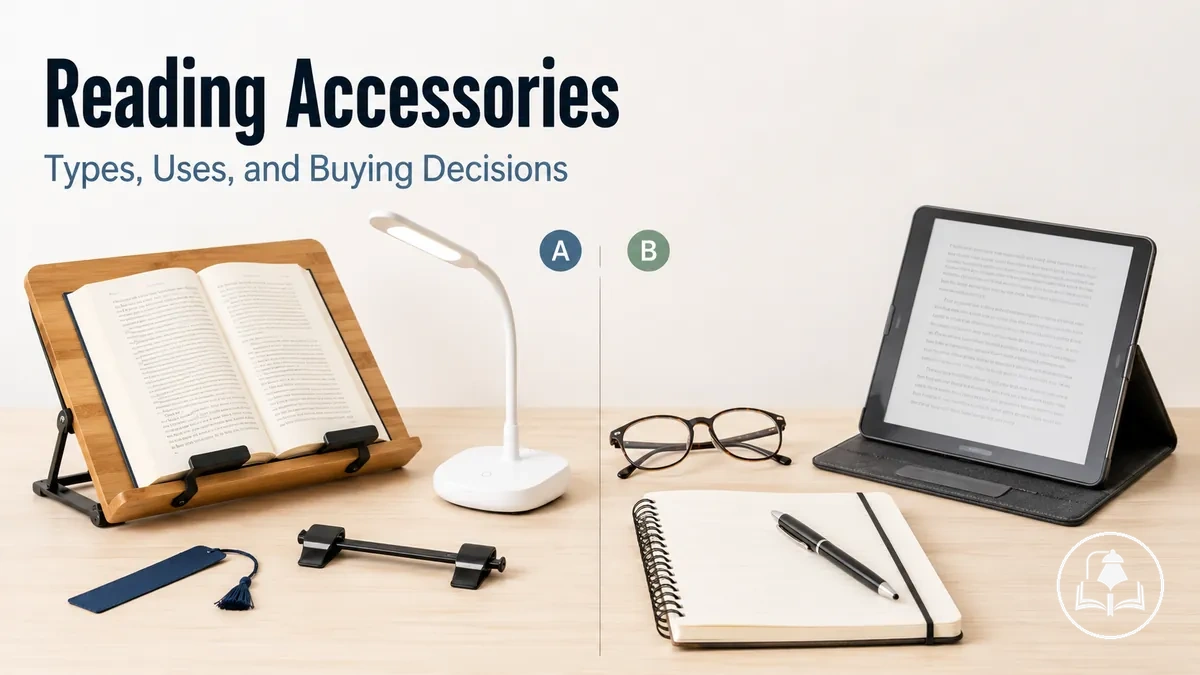
Reading Accessories for Better Comfort, Function, and Buying Decisions
Reading accessories are optional support items used around books, ebooks, and reading spaces to improve comfort, visibility, book handling, book protection, and reading habit organization. Their usefulness depends on reading context, book format, comfort needs, and frequency of use, so the value of any accessory is conditional rather than universal.
For bed reading, a book light may support visibility while a reading pillow or book holder can reduce effort when holding a book becomes less comfortable. For travel or commuting, a book sleeve, bookmark, or compact page holder may be more relevant because carrying, protection, and page tracking become part of the reading experience. For study-focused reading, a reading journal or page marker can help support note-taking and tracking.
Effective buying decisions usually follow repeated reading problems rather than novelty. If low light, hand fatigue, unstable book positioning, damaged covers, or difficulty tracking progress occur regularly, book reading accessories can be evaluated according to function, use case, and reading habits. Reading accessories, reading tools, and reading aids can overlap, but reading accessories serve as the broader category of reading support items used to address common reading needs.
Reading accessories can be grouped by the support function they provide:
- Comfort support, such as a reading pillow, may help when reading position affects comfort.
- Visibility support, such as a book light, may help when lighting conditions make reading less convenient.
- Book handling support, such as a book holder or page holder, may help when stability or grip becomes a concern.
- Book protection and organization support, such as a book sleeve, bookmark, or reading journal, may help with storage, tracking, and reading habit management.
What Reading Accessories Include
Reading accessories are supportive items used around reading rather than the books themselves. Their main support function is to improve comfort, visibility, book handling, protection, or reading organization. Whether a reading accessory is useful depends on reading context, frequency of use, and the reader's specific need.
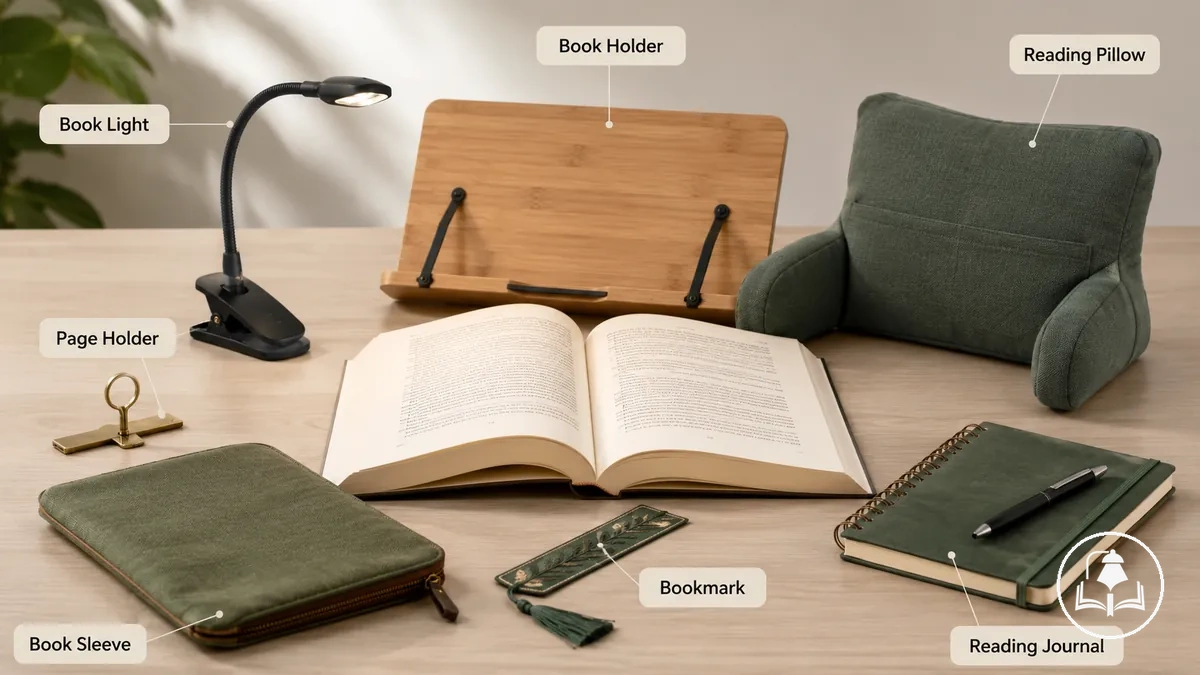
Common reading accessories include a book light, book holder, page holder, reading pillow, book sleeve, bookmark, and reading journal. Each accessory type is connected to a practical outcome, but the value of that outcome depends on the use case and reading conditions.
A book light may support visibility in low-light environments, while a book holder or page holder may support easier book handling during longer reading sessions. A reading pillow is primarily associated with comfort, whereas a book sleeve focuses on book protection when books are carried or stored.
A bookmark and reading journal are often used for tracking progress, notes, or reading habits. Readers exploring different types of reading accessories often find that function provides a clearer decision framework than appearance, especially when practical value is the main consideration.
The examples below show how reading accessories are commonly linked to a specific support function:
- A book light may help when visibility changes between reading environments.
- A book holder may be useful when book weight or reading position affects comfort.
- A page holder may support page control when one-handed reading is preferred.
- A reading pillow may provide comfort support when reading sessions become longer or more frequent.
- A book sleeve, bookmark, or reading journal may support protection, organization, or habit tracking when those outcomes are important.
Indirect support items, including storage or tracking tools, may also be considered reading accessories when their primary purpose remains connected to the reading experience rather than general household organization.
Reading Accessories, Reading Tools, and Reading Aids
Reading accessories, reading tools, and reading aids can describe similar items, but the distinction usually depends on function, reader need, and user expectation. In many situations, the practical choice remains unchanged even when different labels are used, making the comparison most useful when evaluating purpose rather than terminology.
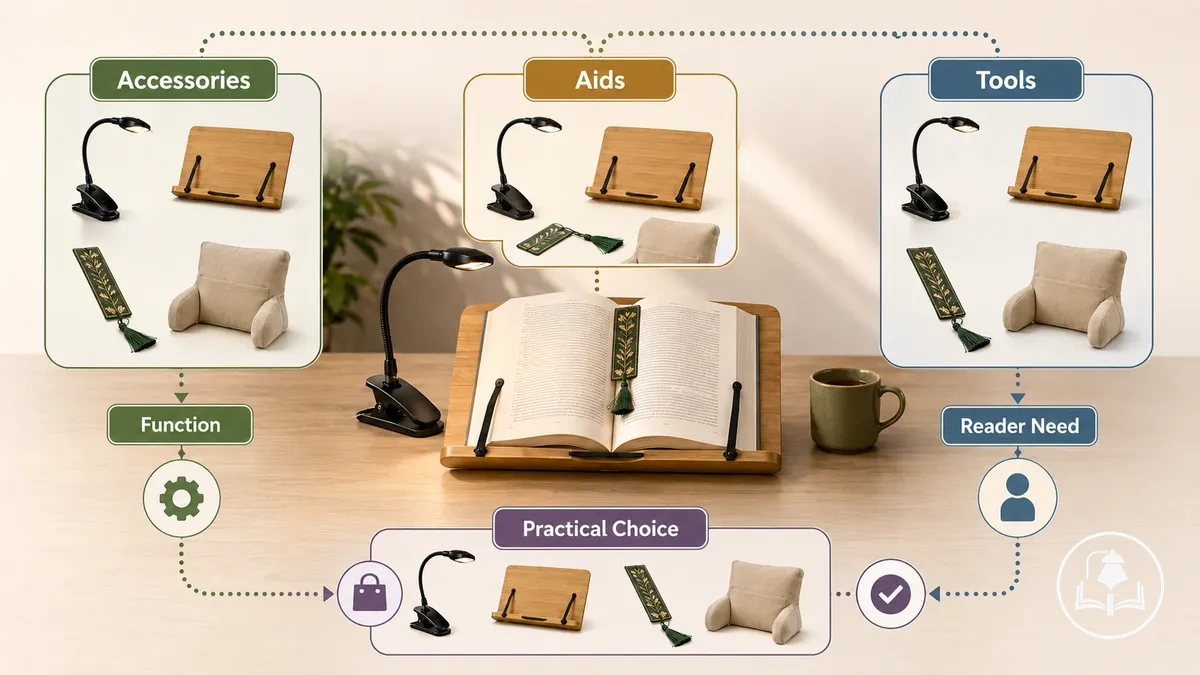
Reading accessories commonly act as support items that improve comfort, visibility, organization, handling, or protection. Reading tools often emphasize completing a specific reading-related task, while reading aids usually highlight support for a particular reading need. This boundary is functional rather than medical and remains within general reading contexts.
The comparison below shows how wording may influence user intent even when the same item could fit more than one category. Readers who want to compare reading accessories by function often benefit from focusing on practical value, use case, and decision criteria rather than the label itself.
| Item or label | Main function | Fit condition | Decision implication |
|---|---|---|---|
| Reading accessories | General reading support | Depends on reading context and frequency | Supports convenience and practical value |
| Reading tools | Task-focused support | Depends on a specific reading activity | Emphasizes function and task completion |
| Reading aids | Need-focused support | Depends on a particular reader need | Emphasizes support for a defined condition |
A book light, book holder, bookmark, or similar support item may reasonably fit more than one label depending on use. For most readers, the more useful decision approach is to evaluate function, need, frequency of use, and expected outcome rather than relying on terminology alone.
Main Reading Accessory Functions
Reading accessory function depends on the reader problem being solved rather than the accessory itself. When comfort, visibility, hands-free reading, protection, page marking, or tracking becomes important, different support items may serve different outcomes depending on reading context and frequency of use.
Main reading accessory functions can be organized by the condition they address and the practical value they provide. This function-first view helps readers evaluate needs before focusing on specific accessory types, especially when considering a buying implication based on actual use.
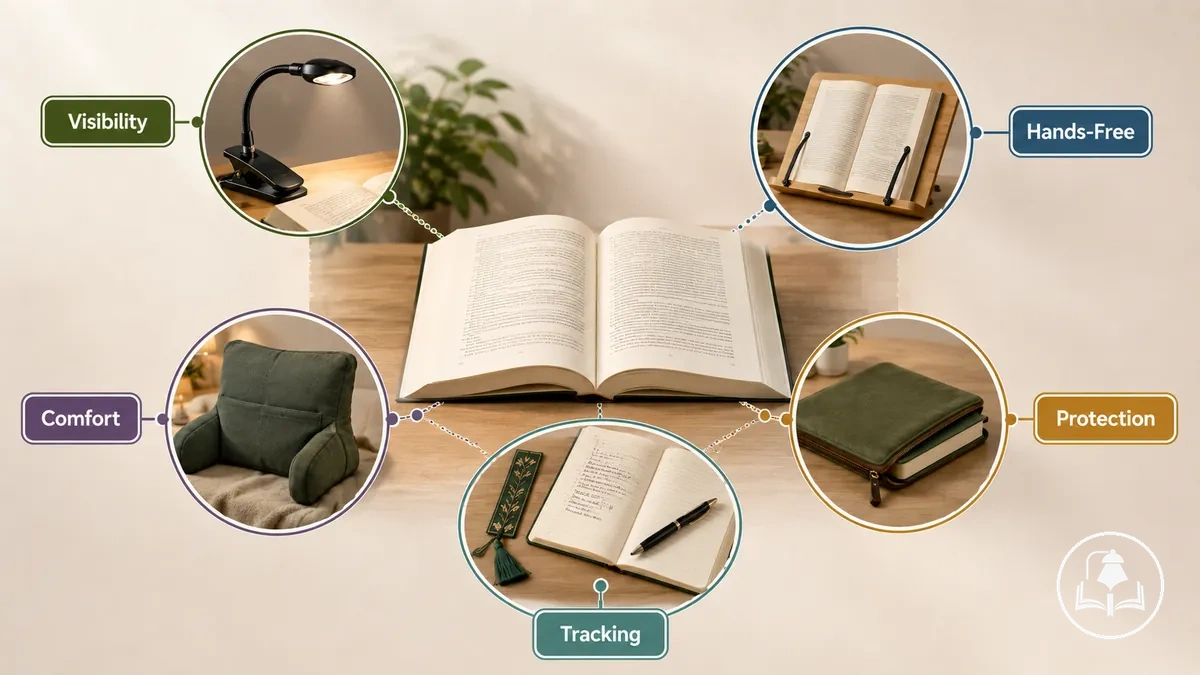
| Accessory group | Attribute | Reading condition | Outcome |
|---|---|---|---|
| Visibility support | Improved illumination | Reading in lower-light environments | May make text easier to see |
| Hands-free support | Book positioning | Extended reading sessions or limited hand use | May reduce the need to hold a book continuously |
| Comfort support | Body or book support | Longer reading periods | May improve reading comfort |
| Protection support | Cover and storage protection | Transport or storage of books | May reduce wear during handling |
| Tracking support | Page marking and progress tracking | Frequent reading or note-taking habits | May improve organization and continuity |
These functions often overlap because a single support item can address more than one reader need. For example, an item used for hands-free reading may also contribute to comfort during longer reading sessions, depending on the use case.
The most useful buying implication is usually to match function with reading condition before comparing individual products. This approach keeps the focus on practical value, trade-offs, and reader needs rather than on accessory quantity or appearance.
Lighting and Visibility Support
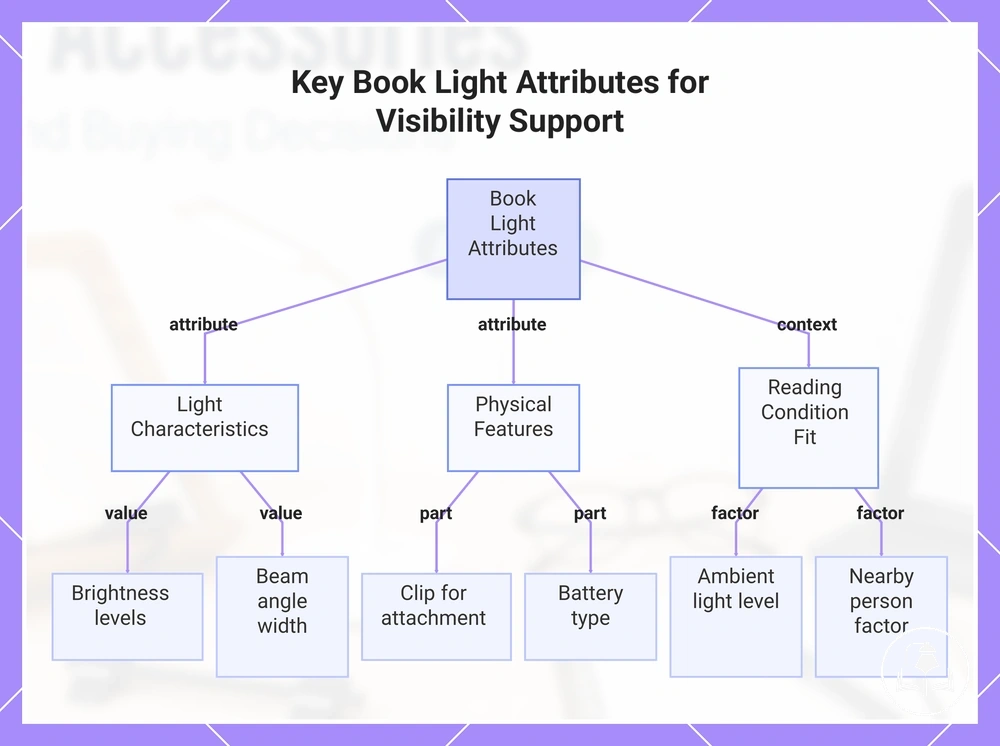
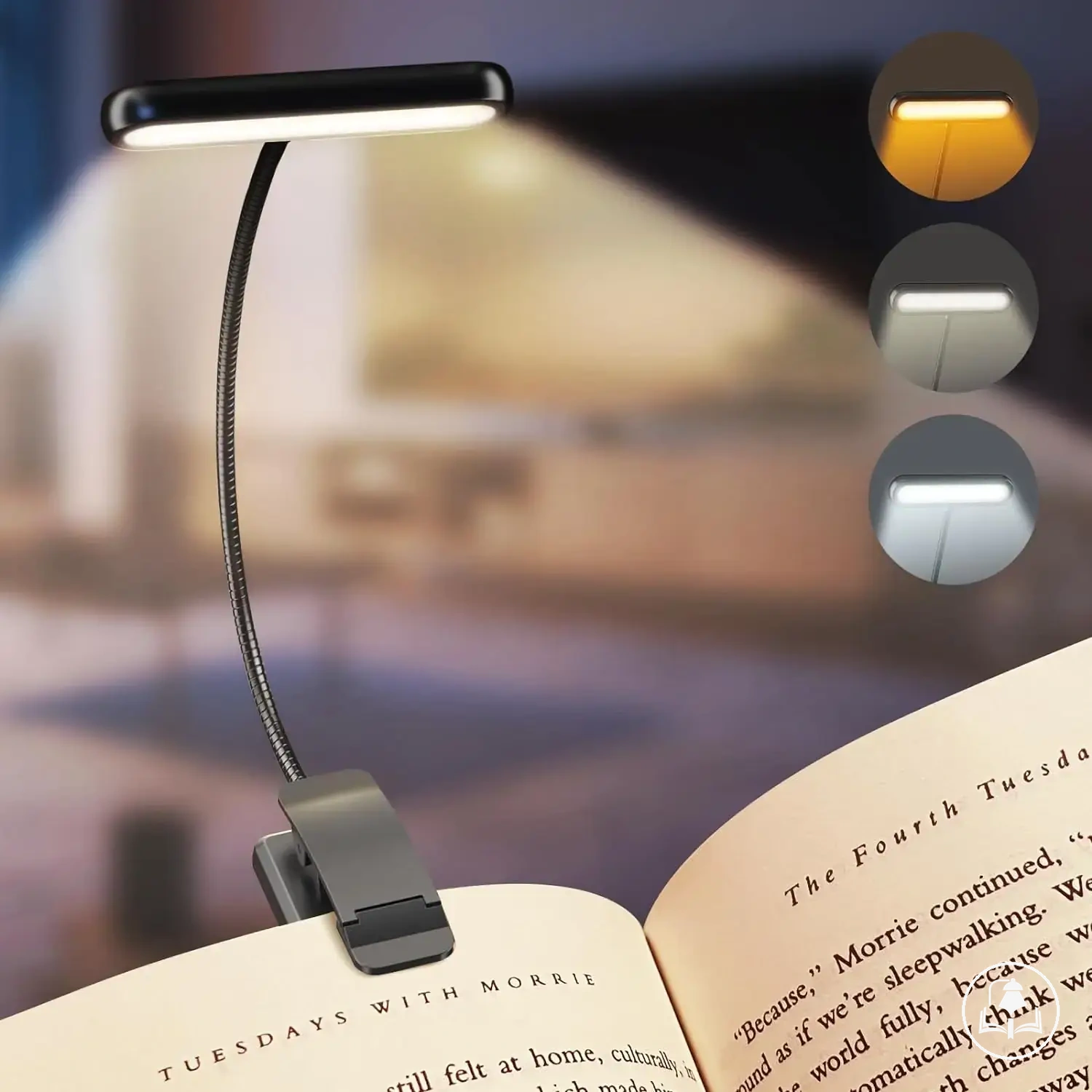
A book light or reading lamp can improve visibility when available light is not sufficient for comfortable reading. The usefulness of a lighting accessory depends on brightness, beam angle, and how the light is directed toward the page in a specific reading condition.
When assessing visibility support, attributes such as brightness, beam angle, battery type, and attachment style help determine practical fit for the reading context. These factors are often more useful than comparing products without considering the reader need or use case.
- Brightness: Different brightness levels may suit different reading conditions depending on ambient light and personal preference.
- Beam angle: A wider beam angle may illuminate more of the page, while a narrower beam may focus light on a smaller reading area.
- Clip: A clip can attach a book light to a book, stand, or nearby surface when positioning flexibility is important.
- Battery: Battery type may influence suitability for travel, bedside reading, or frequent use scenarios.
In a low light environment where another person is nearby, a book light with suitable brightness and beam angle may illuminate the page while limiting unnecessary light spread. The practical value of a reading lamp or book light depends on visibility needs, reading frequency, and surrounding conditions.
This chart shows the main attributes of book lights that affect reading visibility and how they fit specific reading conditions.
Book Holding and Hands-Free Support
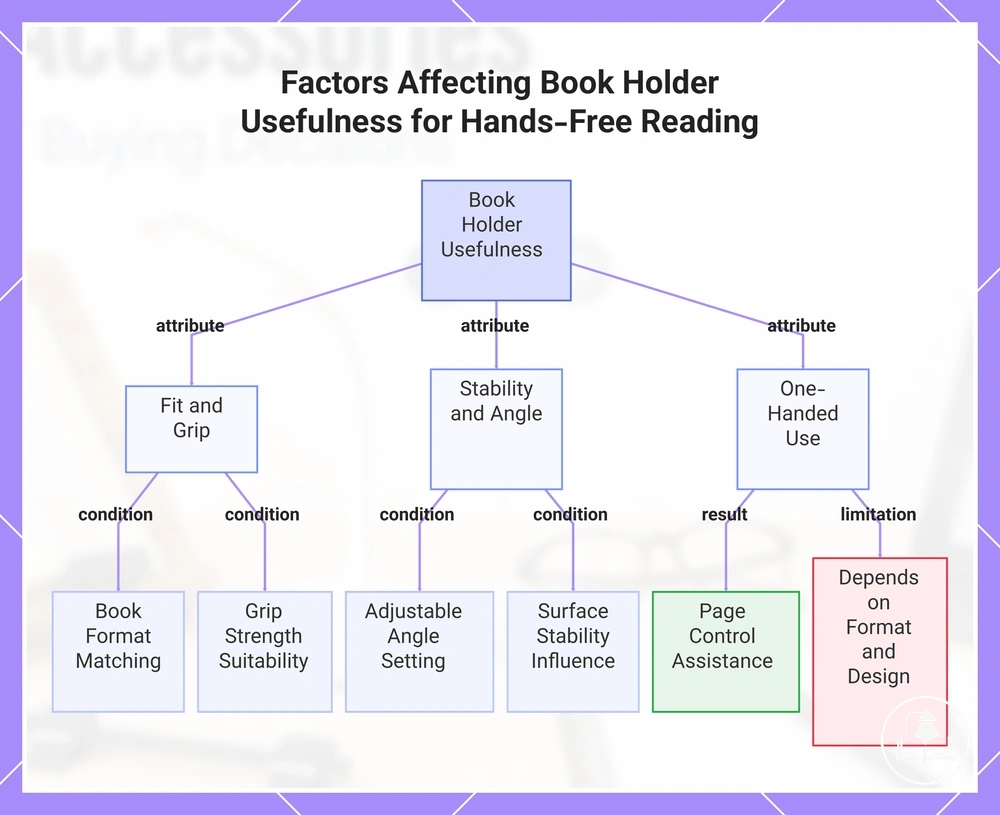
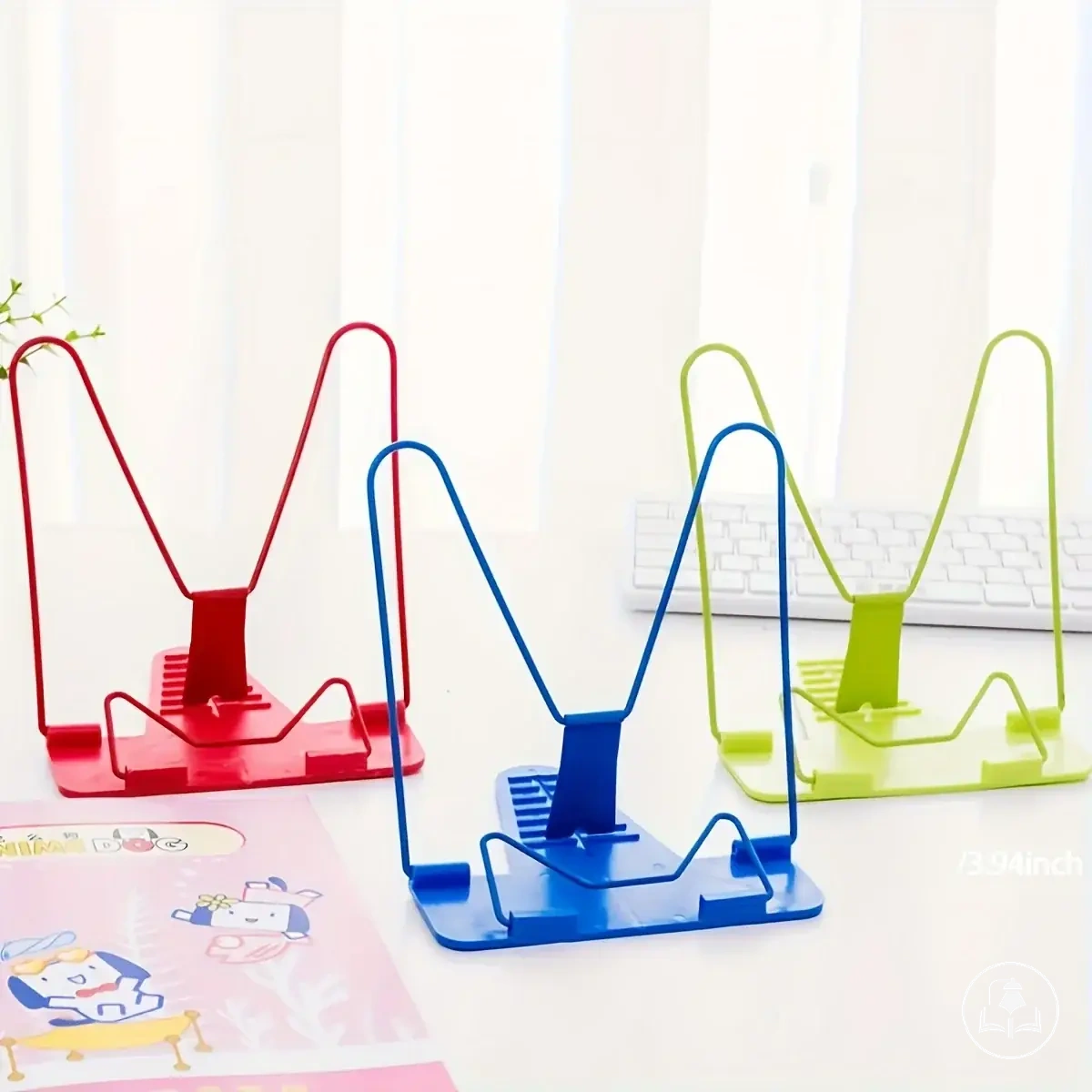
A book holder, page holder, or stand can support hands-free reading when stabilizing a book or controlling pages becomes difficult during reading. The usefulness of these support items depends on book format, grip requirements, surface stability, and the reading condition rather than the accessory alone.
Fit and stability are the main factors that influence whether a book holder or page holder provides practical value in a specific reading context. The following attributes help connect the support function to the reading condition before making a decision.
- Book format: A book holder may suit certain book sizes or weights better than others, depending on the support design.
- Angle: Adjustable angle settings can help position a book for easier viewing when reading at a desk, table, or similar surface.
- Grip: Grip strength may affect how securely a holder supports pages or covers, particularly with heavier books.
- Stability: Surface stability can influence how well a stand holds and stabilizes a book during use.
- One-handed use: A page holder may assist with page control when one-handed reading is preferred, although the outcome depends on book format and holder design.
For example, during bed reading or light multitasking, a stand that stabilizes the book may reduce the need for continuous hand support when the surface and book size are suitable. The practical outcome depends on fit, stability, and how the accessory matches the reading situation.
This chart explains the main factors that determine the practical value of a book holder for hands-free reading, based on fit, stability, and usage conditions.
Comfort Support for Longer Reading Sessions
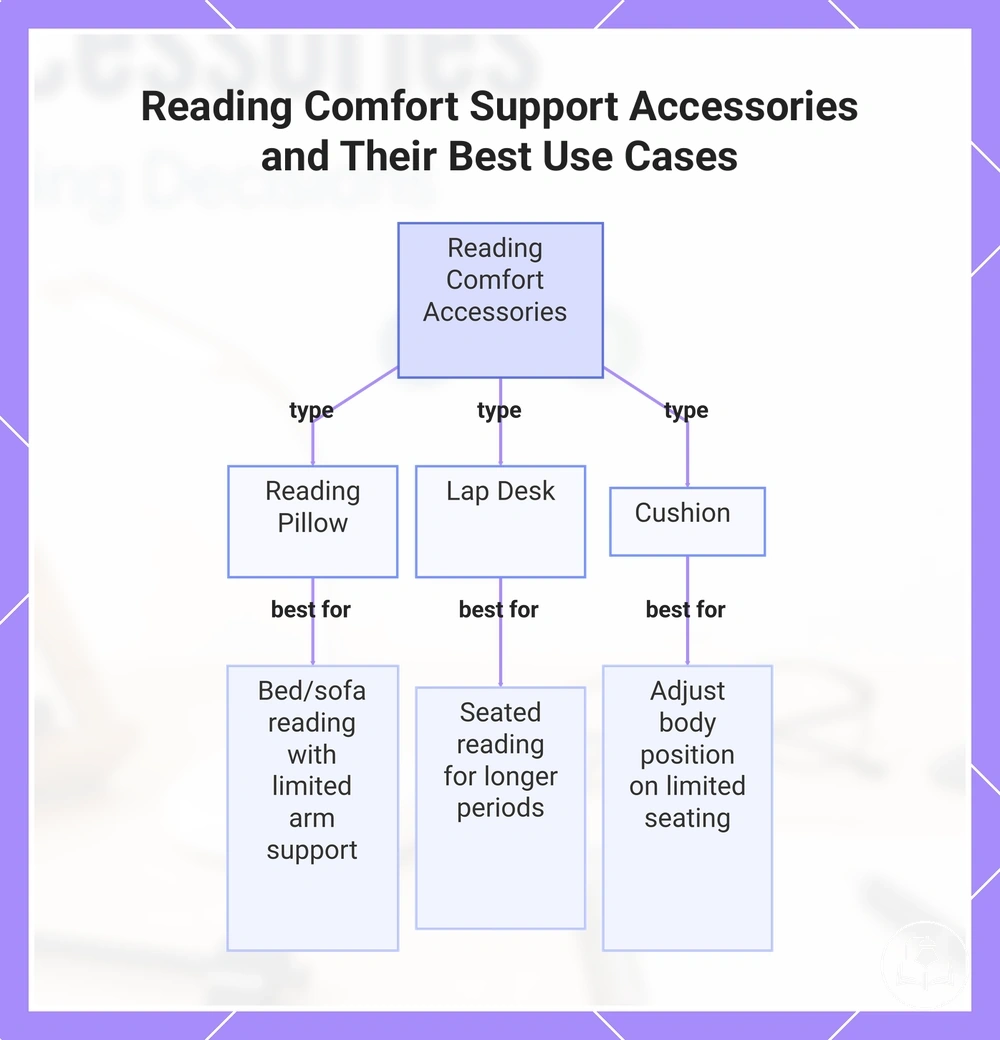
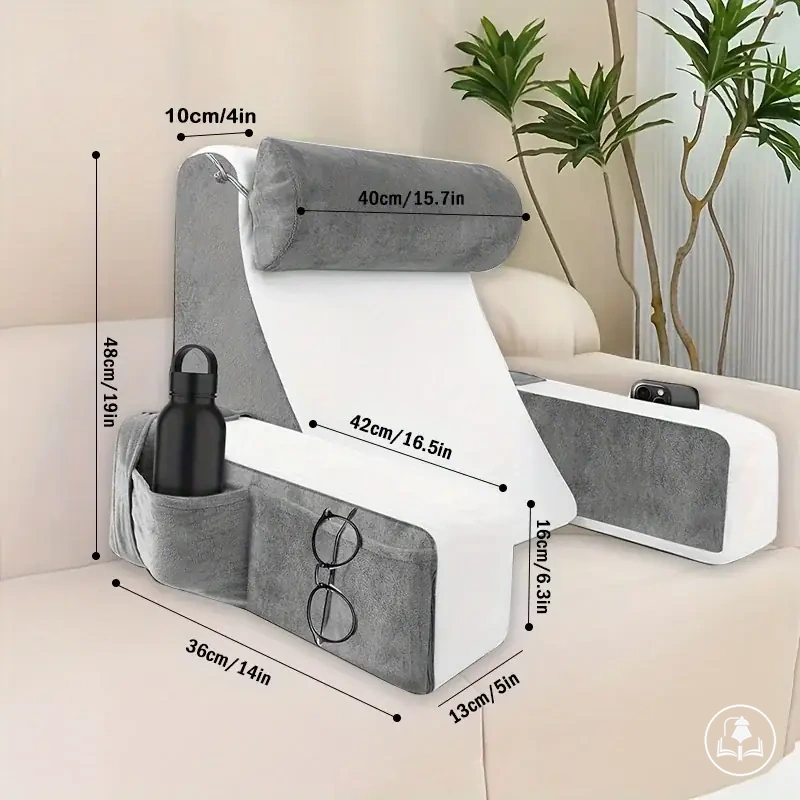
A reading pillow, lap desk, or cushion can support comfort when reading position becomes harder to maintain during longer sessions. The usefulness of these support items depends on posture, arm support needs, session length, and reading position rather than the accessory alone.
Comfort is often conditional on position and duration, so support attributes should be evaluated within the reading context and use case. The following factors help connect each accessory type to a reading condition before making a decision.
- Reading pillow: A raised support surface may help position a book during bed or sofa reading when arm support is limited.
- Lap desk: A stable platform can support book placement when reading from a seated position for longer periods.
- Cushion: Additional cushioning may help adjust body position when existing seating provides limited support.
- Posture: Comfort outcomes often depend on how well the accessory fits a preferred posture and reading context.
- Arm support: Support for the arms or book weight may influence comfort during extended session length, depending on reading conditions.
For example, during sofa reading, a reading pillow may help support book placement while reducing continuous hand effort when positioned appropriately. Readers interested in comfort and hands-free reading support should evaluate support placement, reading duration, and practical fit before choosing an accessory.
This chart shows three types of reading comfort accessories and the specific reading conditions they best support.
Book Protection and Carrying Support
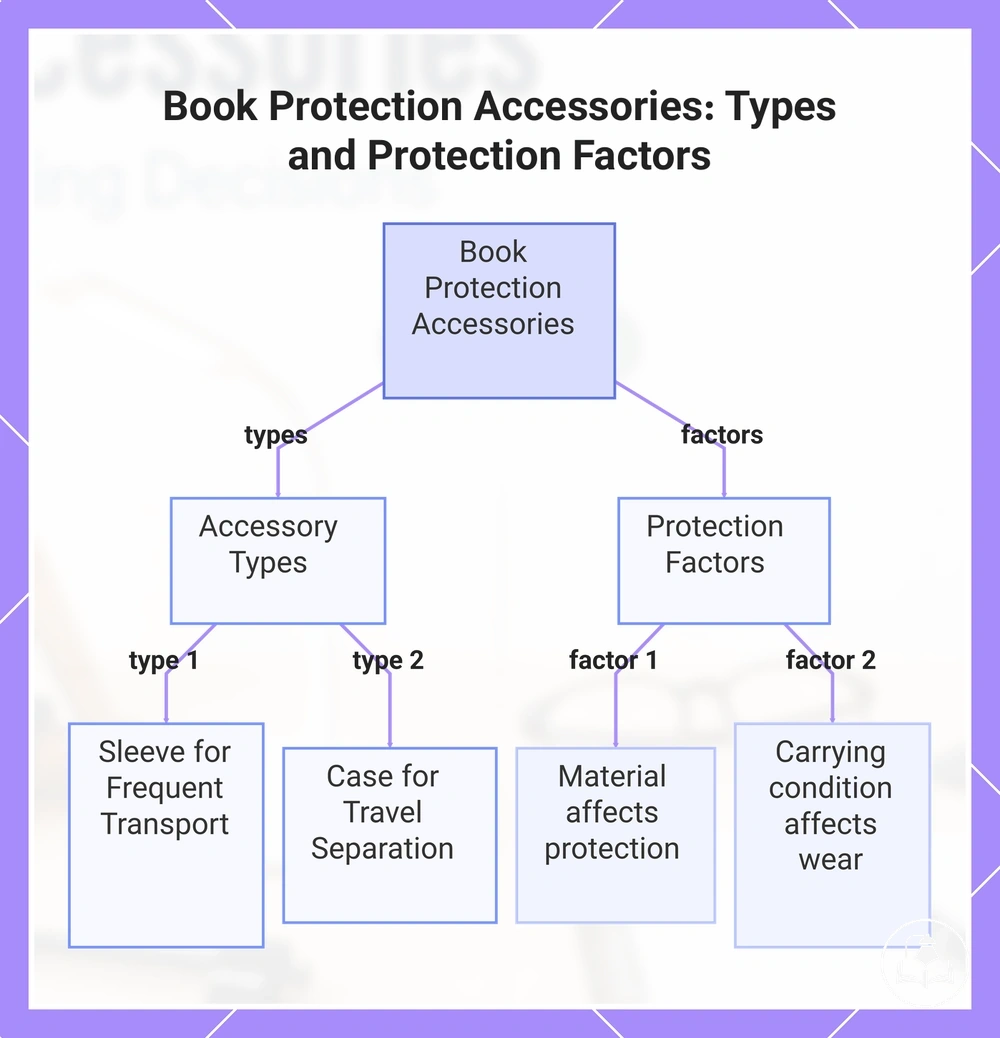
A book sleeve, cover, case, or pouch can provide protection when books are stored on shelves or carried between locations. The usefulness of these support items depends on material, carrying conditions, storage habits, and how frequently a book is handled during use.
Protection is often influenced by both material and carrying condition, so the same accessory may perform differently across reading contexts. The following attributes help connect a protection accessory to a specific storage or transport condition before making a decision.
- Book sleeve: A fabric or padded material may help reduce surface wear when a book is carried inside a bag or backpack.
- Cover: A cover can help protect exposed book surfaces during routine handling and shelf storage, depending on fit and material.
- Case: A structured case may provide additional separation from surrounding items when carrying books during travel.
- Pouch: A pouch can help organize and carry books or reading items together when transport is part of the reading routine.
- Material: Protection outcomes may vary by material, especially when books are exposed to moisture, friction, or repeated transport conditions.
For heavily used paperbacks or books that travel frequently in a bag, a book sleeve may help reduce everyday wear when the material and carrying conditions are suitable. Protection levels depend on accessory design, storage conditions, and the type of risk being managed.
This chart shows the main types of book protection accessories and the key factors that influence their effectiveness in different carrying and storage conditions.
Page Marking, Annotation, and Reading Tracking
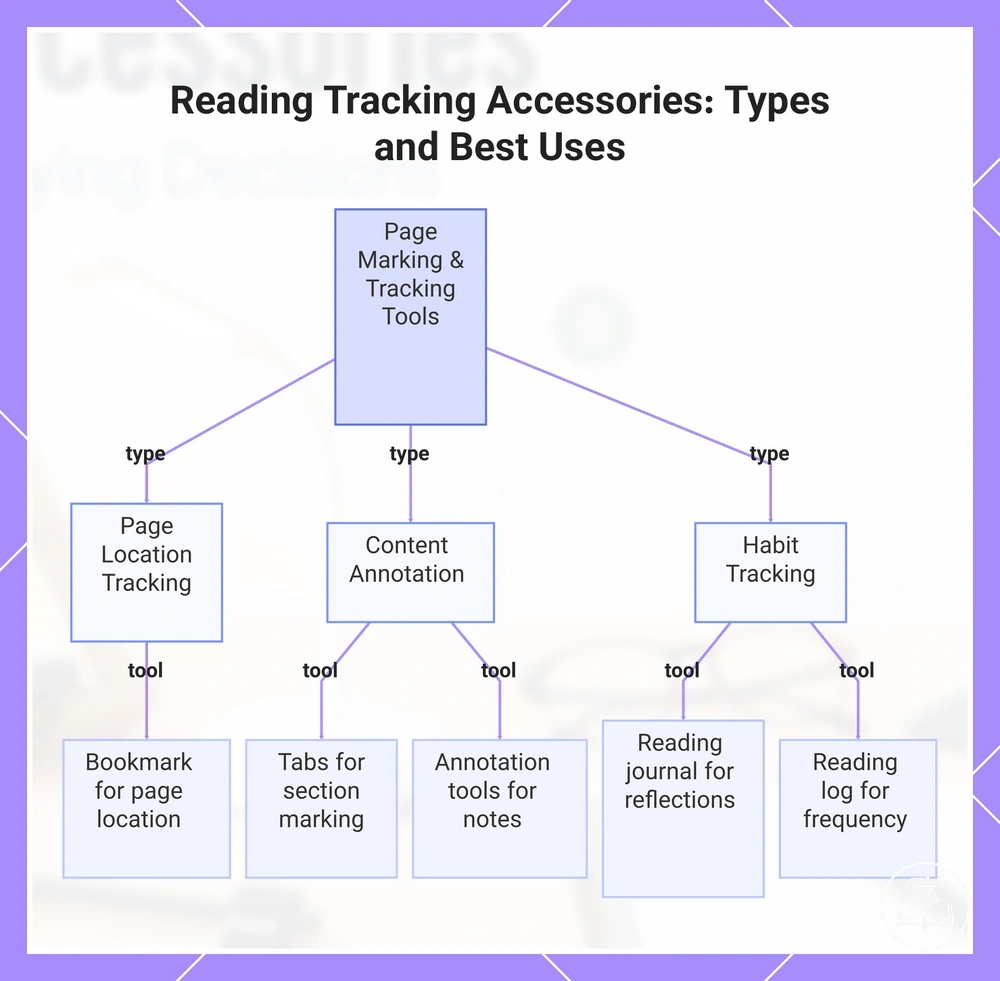
Page marking, annotation, and reading tracking accessories help readers keep their place, capture notes, and monitor reading habits over time. The usefulness of these support items depends on reading context, frequency of use, and whether the goal is simple page tracking or deeper organization of reading activity.
A bookmark is often used for quick page tracking, while tabs and annotation tools can help identify important sections or record notes within a book. A reading journal or reading log usually supports longer-term habit tracking, making the choice dependent on the reader need and intended outcome.
Simple page marking and deeper reading tracking serve different functions, so each accessory type should be matched to the reading behavior it supports.
- Bookmark: Supports page tracking when the primary goal is returning to the correct page during regular reading.
- Tabs: Support annotation by marking important sections, references, or recurring topics when organization is needed.
- Annotation tools: Support notes and content marking when readers want to capture observations during reading.
- Reading journal: Supports reading habit monitoring by recording reflections, progress, or reading outcomes over time.
- Reading log: Supports tracking reading frequency and consistency when maintaining a habit is a priority.
Readers comparing page tracking and marking accessories may find that bookmarks focus on location, tabs support annotation, and journals emphasize reading records. The most practical choice depends on reading behavior, organization needs, and how frequently tracking is used.
This chart categorizes reading tracking accessories into page location, annotation, and habit tracking tools, with specific examples for each category.
Reading Situations That Change Accessory Choices
Home reading, low light conditions, travel, commuting, study sessions, and different book formats can change which accessory attributes matter most. Accessory choice usually depends on the reading situation because environment, mobility, comfort needs, and reading context influence practical value and decision criteria.
A reading environment may prioritize different support functions without making one accessory type universally more important. User situation, reading frequency, and book format often change which trade-offs, conditions, and outcomes deserve greater attention.
The table below maps common reading situations to the constraints that can influence accessory choice.
| Situation | Constraint | Useful accessory function | Decision effect |
|---|---|---|---|
| Home reading | Longer reading sessions | Comfort or positioning support | May increase focus on sustained reading comfort |
| Low light | Reduced page visibility | Visibility support | May prioritize illumination-related attributes |
| Travel | Carrying and storage conditions | Protection and portability support | May increase attention to transport-related needs |
| Commuting | Limited space or movement | Compact handling support | May favor easier page control and book handling |
| Study | Frequent notes and reference use | Annotation and tracking support | May increase the value of organization-related tools |
| Different book formats | Size, weight, or layout differences | Format-specific support functions | Accessory choice may depend on fit and reading behavior |
A reading situation can change, prioritize, or qualify accessory needs over time because reader needs rarely remain identical across every use case. Practical outcomes usually depend on the interaction between reading environment, book format, mobility, comfort requirements, and frequency of use.
Reading in Bed or Low Light
Bed reading and low-light reading can change accessory needs because reduced visibility and a reclined posture often affect how a book is viewed, supported, and handled. Accessory choice usually depends on whether the reading situation creates greater visibility constraints, support needs, or page-control challenges in a particular reading context.
When bed reading combines low light with a less stable reading position, a book light and a holder may address different conditions rather than the same problem. A book light may support visibility, while a holder may support book angle and positioning when posture changes the reading experience, depending on fit and use case.
Visibility, book angle, page control, and comfort support are the main local conditions that often influence decisions in this reading situation.
- Book light: May support visibility in low light when direct page illumination is needed.
- Light spill: Light spill may become a consideration when controlling where illumination reaches is part of the reading condition.
- Clip strength: Clip strength can affect how securely a book light remains positioned during use.
- Holder: A holder may support book positioning when maintaining a comfortable reading angle becomes more difficult.
- Pillow support: Pillow support may help stabilize reading position when comfort needs change during bed reading.
- Page turning: Ease of page turning may become more important when a reclined posture changes how the book is handled.
The practical value of these support items depends on reading frequency, book format, and the specific constraints created by bed reading or low-light reading conditions.
Reading at Home for Comfort and Focus
Home reading shifts accessory decisions toward comfort, stable placement, and reduced distractions because the reading environment often supports longer session length and more flexible setup choices. A home reading setup may prioritize different support items depending on whether the goal is casual reading or sustained focus within a particular reading context.
Chair, sofa, desk, and floor setups can change which accessory attributes matter most because support needs vary by position and session length. Casual reading on a sofa may place greater value on comfort and convenient book positioning, while study at a desk may shift the decision toward stability and easier reference use when focus requirements increase.
The following conditions can help qualify accessory choices within a home reading setup.
- Chair: May support a stable reading position when session length becomes longer.
- Sofa: May increase the value of comfort-oriented support items when book handling becomes less convenient.
- Desk: May favor stable placement and organization-focused reader tools during study-oriented reading.
- Floor setup: May change support requirements depending on reading position and available surfaces.
- Session length: Longer reading periods may increase the practical value of comfort and stability attributes.
- Focus: Focus outcomes may depend on how well the accessory type fits the reading purpose and home environment.
The practical value of book accessories, reading aids, and other support items depends on the interaction between setup, reading purpose, frequency of use, and reader need.
Reading while Carrying Books Outside the Home
Reading while carrying books outside the home shifts accessory priorities toward portability and protection because movement, bag space, and changing conditions can affect book handling. Commute, travel, library, or cafe reading may make compact support items more useful when carrying conditions create inconvenience or damage risk.
Portability and protection are the main local burdens when books move through bags, crowded spaces, or outdoor conditions. The following factors help match a portable accessory to commute or travel conditions without assuming every reader needs extra carrying support.
- Book sleeve: May help protect a book from surface wear when it shares bag space with other items.
- Portability: A lighter accessory may be easier to carry when commute or travel frequency is higher.
- Bag space: Limited bag space may favor compact support items that fit without adding unnecessary bulk.
- Protection: Additional protection may be useful when movement increases friction, bending, or minor damage risk.
- Weather exposure: Changing outdoor conditions may influence accessory choice when moisture exposure is possible.
For example, a reader carrying a paperback to a cafe or library may value a book sleeve when the book sits beside other items in a bag. Practical value depends on carrying frequency, book format, available space, and the level of protection needed.
Reading Physical Books, Ebooks, and Study Materials
Accessory compatibility depends on book format and material type because fit, grip, annotation, and lighting requirements can change across formats. A paperback, hardcover, ebook, textbook, or notebook may interact differently with the same accessory, depending on the reading context and use condition.
Book format can affect how support items fit, hold, illuminate, or support annotation during reading. The comparison below highlights how format-specific conditions may influence accessory decisions without implying exact compatibility.
| Item or label | Main function | Fit condition | Decision implication |
|---|---|---|---|
| Paperback | Portable reading format | Fit may depend on size, thickness, and holder grip | Accessory choice may prioritize flexibility and portability |
| Hardcover | Structured book format | Heavier weight may affect stand or holder fit | Support items may require greater stability |
| Ebook | Digital reading format | Lighting and holders depend on device shape and reading use case | Accessory compatibility may differ from printed formats |
| Textbook | Reference and study reading | Larger size may influence stand, annotation, or support fit | Stability and page management may become more relevant |
| Notebook | Writing and annotation support | Annotation tools depend on note-taking style and page use | Accessory selection may focus on writing-related functions |
A holder that fits a paperback may support a hardcover differently because weight and dimensions can change grip conditions. Compatibility depends on format attributes, reader need, and how the accessory function aligns with the intended reading or annotation task.
Buying Criteria for Reading Accessories
Buying criteria depend on reading context because fit, usefulness, durability, portability, and habit match often determine practical value more than accessory type alone. A sound decision usually comes from matching a reading aid to reader need, frequency of use, and the intended reading condition.
Different book accessories create different trade-offs, so the same criterion may matter more in one use case than another. A simpler accessory may be appropriate when the function is occasional, while a more specialized option may suit a recurring need when the added function supports a specific reading habit.
Buying quality is easier to evaluate when each criterion is connected to a real reading context rather than a feature list. The table below highlights common decision variables and the risks or trade-offs they may introduce.
| Criterion | Condition to check | Risk or decision |
|---|---|---|
| Fit | Accessory matches book format, size, or reading setup | Poor fit may reduce usefulness or comfort |
| Usefulness | Function addresses a recurring reading need | Limited use may reduce practical value |
| Durability | Construction aligns with expected frequency of use | Higher durability may not be necessary for occasional use |
| Portability | Weight and size suit commute, travel, or storage conditions | Greater portability may involve a trade-off in other features |
| Habit match | Accessory supports existing reading behavior | A mismatch may lead to infrequent use |
A cheaper or simpler accessory may be appropriate when the reader need is limited and the function requirement is straightforward. A more specialized accessory may be worth considering when the same condition occurs frequently and influences the reading experience. Readers comparing these criteria can use them as a starting point for how to choose reading accessories, with the final decision depending on fit, habits, portability needs, and practical value in a specific reading context.
Fit, adjustability, and book compatibility
Fit, adjustability, and book compatibility depend on whether an accessory can accommodate the reader's book size and reading position without reducing usability. A support item that suits one reading context may be less effective in another when clamp range, angle settings, or stability do not match the intended use condition.
Dimensions, clamp range, angle settings, page pressure, and stability are practical fit checks because they influence how comfortably an accessory supports different books and positions. Compatibility should be evaluated as a condition-based decision rather than an exact match assumption when specifications are limited.
| Criterion | Condition to check | Risk or decision |
|---|---|---|
| Book size | Accessory accommodates the height, width, or thickness of the book | Poor fit may reduce stability or usability |
| Clamp range | Clamp adjusts to the book or support surface | Limited clamp range may restrict compatibility |
| Angle | Position adjusts to the preferred reading posture | Limited angle adjustment may reduce comfort |
| Page pressure | Support holds pages without excessive force | Too much page pressure may affect ease of use |
| Stability | Accessory remains secure during normal reading | Reduced stability may affect usability |
If an accessory is close to the required fit but not ideal, adjusting the reading position or choosing an option with greater adjustability may improve compatibility. Readers evaluating borderline fit situations can review reading accessory fit fixes before making a final decision.
Material quality, durability, and portability
Material quality affects durability and portability because build quality can influence weight, cleaning effort, carrying convenience, and resistance to regular use. The most suitable material often depends on reading context, travel frequency, book weight, and how often the accessory is handled, creating a trade-off that depends on the use condition.
Fabric, plastic, metal, foam, and paper-based materials represent different material trade-offs that can affect durability and portability in different ways. Material quality should be evaluated according to expected use rather than assumed lifespan when long-term performance varies by frequency and reading context.
- Fabric: May offer lower weight and easier carrying, but durability can vary with cleaning frequency and daily use conditions.
- Plastic: May support portability when lower weight is important for travel or routine carrying.
- Metal: May provide greater stability for heavier books, although additional weight can reduce carrying convenience.
- Foam: May support comfort-focused reading aids, but cleaning and wear characteristics depend on use conditions.
- Paper-based materials: May suit lighter-duty functions, though durability can be more sensitive to repeated handling or moisture exposure.
For travel use, lower weight may become more important than maximum durability. For heavy books or daily use, build quality may affect stability and practical value when the accessory experiences more frequent handling.
Ease of use and reading habit fit
Ease of use depends on how well an accessory matches an actual reading habit rather than an idealized routine. A reading aid that fits reading frequency, setup time tolerance, and storage conditions may provide more practical value than an accessory that adds effort in a different reading context.
Reading habit fit is easier to assess when frequency, setup time, storage, cleaning, and distraction risk are treated as usability checks. These conditions can influence whether support items remain useful over time, depending on reader need, effort level, and the intended use case.
| Criterion | Condition to check | Risk or decision |
|---|---|---|
| Frequency | How often the accessory is used during reading | Low frequency may reduce practical value |
| Setup time | Time needed before reading can begin | Additional effort may discourage regular use |
| Storage | Space available between reading sessions | Storage limitations may reduce convenience |
| Cleaning | Maintenance effort required during use | Higher effort may not suit every reading habit |
| Distraction risk | Whether the accessory interrupts reading flow | Added complexity may reduce ease of use |
A daily reader may accept more setup time when a function supports frequent use, while an occasional reader may prefer simpler support items. A student or gift buyer can evaluate reading habit fit according to actual reading patterns rather than assumed routines when making a selection decision.
When Reading Accessories Are Worth Buying
Reading accessories are worth buying when they solve a repeated problem related to comfort, visibility, handling, protection, or tracking. Cost-value depends on how often the problem occurs, how well the accessory function addresses it, and whether the accessory fit matches the reading context.
Worth depends on frequency, problem severity, and accessory fit rather than the number of accessories owned. A support item may provide practical value when it reduces recurring effort or inconvenience with an acceptable replacement risk for the intended use case.
| Criterion | Condition to check | Risk or decision |
|---|---|---|
| Problem frequency | The issue occurs regularly during reading | Infrequent problems may reduce cost-value |
| Accessory function | The function directly addresses the reader need | Weak alignment may limit practical value |
| Price sensitivity | The cost reflects expected frequency of use | Higher cost may be harder to justify for occasional use |
| Durability | The item suits the expected level of handling | Lower durability may increase replacement risk |
| Accessory fit | The accessory matches the reading habit and use case | Poor fit may reduce continued use |
A low-cost bookmark, reading light, or similar reader tool may be worthwhile when it addresses a repeated problem during regular reading. More complete accessory sets may make sense when multiple conditions occur frequently and the added functions align with the reader need.
A decision should focus on whether the accessory reduces a recurring burden rather than whether it includes more features. Readers comparing options can apply the same logic to best reading accessories by need when evaluating expected use frequency, price sensitivity, and practical value.
Here are product examples that may make comparison easier. Before buying, always review the compatibility criteria, essential features, and product details.

Reading Accessories as Sets and Gifts
A reading accessories set or gift bundle can make sense when the recipient's needs are broad, uncertain, or spread across comfort, tracking, and book protection. Individual items are often safer when the reader need is specific, because a single accessory can reduce duplicate risk and improve practical usefulness.
Sets work best when the buyer is unsure which support items the recipient already owns or prefers. A themed set may feel more complete, while a need-specific accessory choice may fit better when reading format, portability, or comfort needs are already known.
The checklist below separates broad gift suitability from more precise accessory selection.
Here are product examples that may make comparison easier. Before buying, always review the compatibility criteria, essential features, and product details.
| Criterion | Condition to check | Risk or decision |
|---|---|---|
| Recipient | Reading habits are broad or uncertain | A gift bundle may provide wider coverage |
| Reading format | The recipient uses paperbacks, hardcovers, ebooks, or study materials | Format mismatch may reduce usefulness |
| Comfort needs | The recipient often reads for longer sessions | Comfort support may matter more than decorative items |
| Portability | The recipient carries books outside the home | Compact support items may be more practical |
| Duplicate risk | The recipient may already own common reader tools | A need-specific item may be safer than a themed set |
A reading accessories set should be selected for fit and practical usefulness rather than because all readers need the same items. A gift bundle may suit uncertain needs, while an individual accessory may be better when one repeated reading problem is already clear.
Common Buying Mistakes With Reading Accessories
Common buying mistakes usually depend on choosing an accessory by novelty instead of use-case fit. A mismatch can reduce usefulness, comfort, portability, or compatibility when the accessory type does not match the reader need.
Most buying mistakes can be corrected by checking reading context before selecting reader tools or support items. The checklist below highlights common mismatch patterns and a safer correction for each decision.
| Criterion | Condition to check | Risk or decision |
|---|---|---|
| Ignoring book size | Check whether the accessory accommodates the intended book format | Poor fit may reduce stability; correction: match the accessory to book size |
| Choosing weak lighting | Check whether lighting suits the reading environment | Weak lighting may limit visibility; correction: match lighting to reading conditions |
| Buying bulky travel items | Check carrying frequency and available storage space | Bulky travel items may reduce portability; correction: prioritize travel fit when needed |
| Overvaluing sets | Check whether included items match actual reader needs | A set may duplicate functions; correction: compare usefulness before selecting a bundle |
| Neglecting material quality | Check handling conditions and expected frequency of use | Material quality may affect durability; correction: match material to usage conditions |
A safer decision usually comes from correcting one mismatch at a time rather than comparing accessories by appearance or novelty. Reading aids tend to provide more practical value when fit, function, and reading context remain aligned with the intended use case.